Iran Stood Its Ground: Stunning Washington Failure


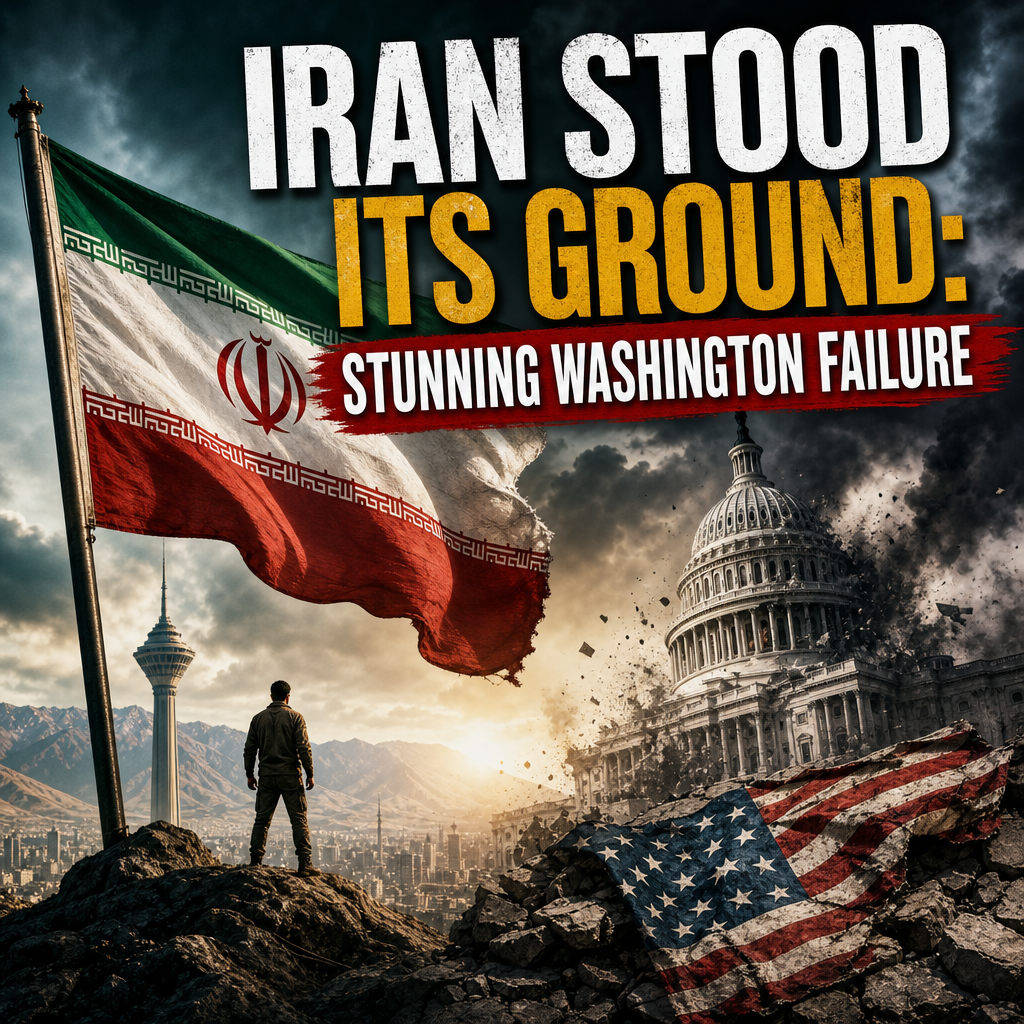
Iran stood its ground, and the latest round of tensions with Washington has once again exposed how limited American pressure can be when it runs into a government determined to absorb the blow rather than bend.
At first glance, that may look like a simple story of defiance. But the reporting across international outlets paints a more complicated picture: Iran is not acting from strength alone, the United States is not operating with unlimited options, and the wider region is watching for the next misstep. The result is less a clean victory for either side than a reminder that coercion, sanctions, and military threats often produce resilience as well as resistance.



Why Washington’s Pressure Campaign Fell Short
The clearest takeaway from the coverage is that Washington’s leverage has limits. The U.S. can still punish, isolate, and threaten, but it cannot easily dictate outcomes in Tehran when Iranian leaders believe that compromise would invite more pressure later. That calculation has shaped Iran’s response for years, and recent events suggest it remains intact.
Several strands in the reporting point in the same direction:




– Iran continues to frame its position as one of sovereignty and deterrence, not concession.
– U.S. policymakers, meanwhile, are stuck balancing escalation risks against the need to look firm.
– Regional allies and rivals alike know that any American move that goes too far could widen the conflict rather than solve it.
This is where the idea of a “Washington failure” becomes more than rhetoric. It is not necessarily that the U.S. failed to achieve every objective; it is that the strategy of pressure has not produced the kind of decisive shift Washington hoped for. Instead, it has often hardened positions.
That does not mean pressure is irrelevant. Sanctions still hurt the Iranian economy, and isolation still constrains Tehran’s options. But the sources suggest a broader truth: punishment alone rarely creates political surrender, especially in a state that has built its identity around surviving external hostility.
Iran Stood Its Ground, but Not Without Cost
Iran stood its ground: resilience and risk
There is a temptation to read Iran’s refusal to back down as proof of strategic success. That would be too neat. The picture is more mixed.
Iran’s government appears to have concluded that endurance is preferable to compromise on terms set by Washington. In that sense, the country has preserved its central red lines and demonstrated that it can outlast pressure campaigns. But resilience should not be confused with immunity. The economic burden on ordinary Iranians remains severe, and the political system continues to carry the strain of managing public frustration, external threats, and internal demands for stability.
Al Jazeera’s broader regional coverage often emphasizes the human and diplomatic cost of confrontation, and that matters here. The longer the standoff lasts, the more ordinary people pay the price through inflation, restricted trade, and uncertainty. Even when Tehran can claim it has not surrendered, the public still lives with the consequences.
RT’s framing, by contrast, tends to highlight Iranian resolve and U.S. overreach. That angle captures an important truth: Washington’s confidence often rests on assumptions that adversaries will eventually fold. Iran has spent years proving that assumption wrong. Still, a balanced reading should also acknowledge that Iranian leaders are making a choice, not merely enduring one. They are accepting risk because they believe the alternative would be worse.
What the Regional View Suggests
A stalemate, not a clean win
The most realistic interpretation of the current moment is stalemate. That is not as dramatic as either side’s preferred narrative, but it fits the evidence best.
Sky News’ international reporting often places such crises in the context of broader security concerns: shipping lanes, Gulf stability, proxy tensions, and the ever-present danger of miscalculation. From that angle, the key question is not who “won” a confrontation, but whether both sides have enough control to prevent a larger one.
That distinction matters. A state can stand firm and still leave its rivals unconvinced. A superpower can project force and still fail to compel. When both things happen at once, the outcome is usually an uneasy equilibrium rather than a decisive settlement.
There are three reasons this equilibrium may persist:
1. Neither side wants a full-scale conflict.
Washington knows the military and political costs would be high. Tehran knows open war could be catastrophic.
2. Both sides are managing audiences at home.
Iranian leaders want to project resistance. U.S. leaders need to look credible without appearing reckless.
3. The region itself discourages simplistic solutions.
Neighboring states, energy markets, and global trade all create incentives for restraint, even when rhetoric is heated.
The Bigger Lesson: Pressure Has Limits
The deeper lesson from this episode is not just about Iran or the United States. It is about the limits of using pressure as a substitute for diplomacy. Sanctions, military posturing, and isolation may delay bad outcomes, but they do not automatically create good ones. Sometimes they simply force the other side to become more stubborn.
That does not absolve Tehran of responsibility. Iran’s own decisions have contributed to mistrust and instability, and its regional behavior continues to alarm many governments. But Washington’s failure to convert pressure into compliance suggests that strategy matters as much as force. If the objective is lasting restraint, then dialogue, credible off-ramps, and clear incentives are usually more effective than threats alone.
The current moment leaves little room for triumphalism. Iran has shown it can absorb pressure and keep its core position intact. The U.S. has shown it still has tools, but fewer than it may want to admit. For now, the story is not of one side crushing the other. It is of both sides testing the limits of power—and discovering that those limits are real.